
Industrial hemp is rapidly re-emerging globally as a strategic crop for the twenty-first century.
At a time of escalating climate disruption, environmental degradation, resource scarcity, construction emissions, and economic instability, countries are increasingly searching for industries capable of generating employment, supporting resilience, restoring ecosystems, and creating new value chains.
Sri Lanka has an important opportunity to position itself within this transition.
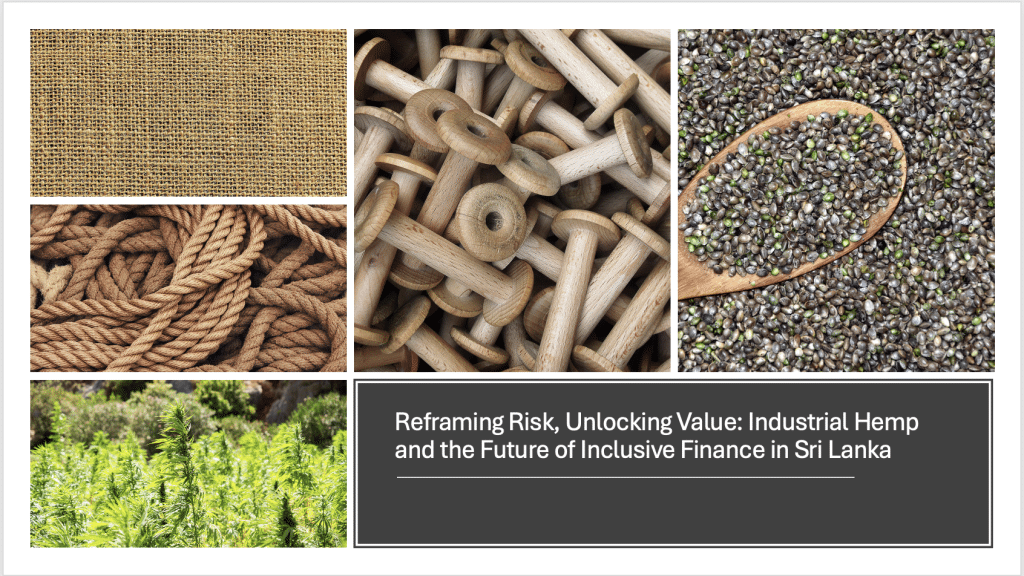
Convened by Incitare Sri Lanka and the Global Rethinking Finance Collaborative, this high-level policy roundtable brought together policymakers, investors, scientists, development agencies, entrepreneurs, sustainability leaders, and international experts to examine the future potential of industrial hemp and climate-smart construction materials.
The discussion focused on practical pathways for regulatory reform, sustainable enterprise development, regenerative agriculture, circular economy systems, and low-emissions manufacturing.
The event also explored the growing international market for sustainable building materials, including hemp, kenaf, rice husk, and coconut husk applications.
As highlighted in recent United Nations Conference on Trade and Development analysis, industrial hemp has applications across food systems, textiles, biomaterials, construction, soil rehabilitation, nutraceuticals, and circular manufacturing systems.
Yet many countries remain constrained by outdated legislation and misconceptions that fail to distinguish industrial hemp from narcotic cannabis.
Sri Lanka’s current policy landscape presents both challenges and opportunities.
This roundtable created an evidence-based platform capable of supporting informed policy dialogue, strategic partnerships, and practical next steps towards a modern regulatory framework aligned with economic recovery, climate resilience, and sustainable development.
The programme examined global lessons, regulatory models, enterprise pathways, impact finance opportunities, and the role of sustainable construction in reducing emissions and increasing resilience.
The event forms part of a broader effort to position Sri Lanka as a future-oriented innovation and investment destination within emerging regenerative and circular economy sectors.